


The container celebrates its 70th anniversary as a key element of the global transport revolution
Seventy years after the voyage that sparked the modern era of containerisation, this unit of load forms the basis of intermodal transport networks and moves hundreds of millions of tonnes of goods every year.
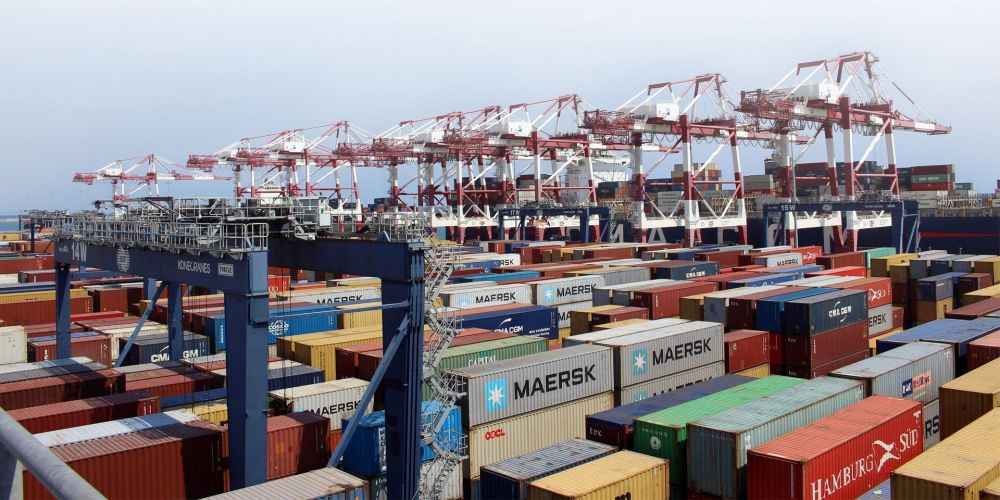
Seventy years ago, on 26 April 1956, the converted oil tanker Ideal X set sail from the US port of Newark bound for Houston, carrying 58 metal containers on deck. That voyage is regarded as the starting point of modern containerisation, a transformation that would go on to reshape not only maritime transport, but also road and rail transport, ports and, ultimately, the organisation of international supply chains.
The idea, championed by road haulage entrepreneur Malcolm McLean, was a response to a primarily logistical problem. Until then, much of general cargo was transported as conventional break bulk, comprising boxes, sacks, barrels and other packages that had to be handled individually during port operations.
This system entailed high labour costs, long lay-ups for ships in port and a greater risk of damage or loss. In contrast, the container made it possible to load the goods at the point of origin into a sealed unit and keep them there for much of their journey to their destination.
An intermodal revolution
However, the container’s greatest contribution was not merely to speed up the loading and unloading of ships. Its true potential lay in its intermodal nature, as a single unit could be transferred from a ship to a lorry or a train without the need to handle the goods inside it directly.
In fact, modern containerisation has been closely linked to road transport since its inception. McLean came from this very sector and sought to eliminate the need for transhipment between different modes of transport. When the Ideal X arrived in Houston, the containers could be placed onto chassis and continue their journey by road.
The subsequent international standardisation of dimensions and technical specifications turned the container into a universal unit capable of moving across maritime, rail and road networks in different countries.
(…)
Share this article
Come and visit us at Logistic & Industrial Build Madrid
Full programme coming soon
More than 100 new companies join the 2026 editions of Empack, Logistics & Automation and Logistic & Industrial Build
The fairs organised by Easyfairs will bring together the packaging, logistics and industrial construction sectors on 11 and 12 November at Halls 2, 4 and
The container celebrates its 70th anniversary as a key element of the global transport revolution
Seventy years after the voyage that sparked the modern era of containerisation, this unit of load forms the basis of intermodal transport networks and moves
The ‘cold millionaires’: the most unexpected side effect of the new weight-loss drugs
The pharmaceutical cold chain has evolved from a niche sector to become a strategic component of the industry. Major operators are investing billions in an
Logistics take-up exceeded one million square metres in Spain in the first half of 2026
This represents an 80 per cent increase on the same period last year, according to the latest analysis by Cushman & Wakefield. The Spanish logistics