


The DeCA is not a PDF: five decisions the shipper must make before October
The digitisation of the control document requires a review of processes, responsibilities and systems before it comes into force
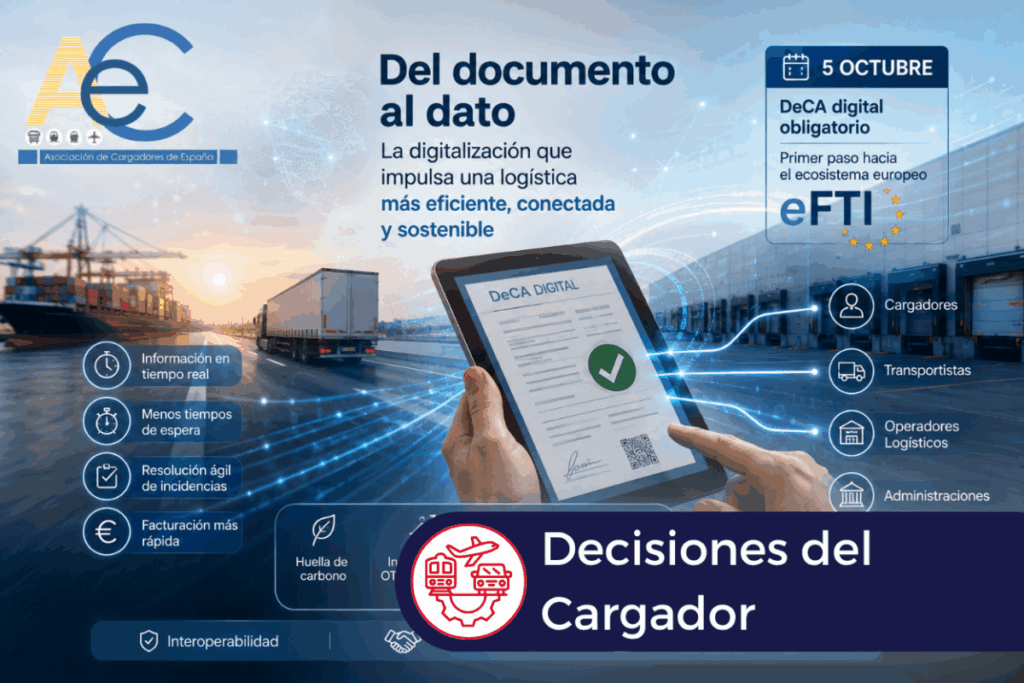
5 October will mark a significant change in road freight transport with the requirement to carry the Administrative Control Document (DeCA) in digital format.
However, it would be a mistake to view this transformation as merely a replacement of paper with a PDF. Digitisation means converting documentation into data that can be generated, verified, transmitted and stored securely. Therefore, adapting to the DeCA is not just a technological project, but also an organisational and operational one.
The Shipper’s Decision: defining the process before digitising it
The first decision is to determine who will generate the DeCA for each consignment. This can be done directly by the shipper, the logistics operator, a technology platform or the carrier, but responsibility must be clearly assigned.
It is not enough to simply assume that ‘the carrier will do it’. It is necessary to establish who enters the data, who validates it, when the document is generated and how errors are corrected. It must also be defined what happens if the registration number changes, the destination is modified, the weight varies or several operators are involved in the contract.
The second decision is to identify where the information comes from. Some of the data will be in the ERP, some in the TMS, in the warehouse system or on the booking platform. The aim must be to prevent a person from having to enter the same registration number, address, weight or consignment reference multiple times.
Before procuring new tools, it is advisable to check whether the current systems can share the necessary information. The priority should not be to accumulate platforms, but to ensure their interoperability.
The third decision concerns data quality. A digital document containing incorrect information is still an incorrect document. The company must therefore decide who will check the information before the vehicle leaves, what automated checks can be put in place, and how any amendments will be managed.
The fourth decision is to define how the document will be accessed during transport. The driver must be able to produce it when required, whilst ensuring data security, access control and the retention of evidence.
Finally, the shipper must decide whether to use this requirement to improve its operations. Transport data can help reduce waiting times, speed up the resolution of incidents, automate invoicing, measure service levels or facilitate the calculation of emissions.
5 October should not merely be the deadline for having a tool in place. By then, the processes, responsibilities and information-sharing arrangements should already have been defined.
The shipper’s real decision is not whether to digitise the document, as that obligation is already in place. The decision is whether to simply comply with the requirement or to use it as an opportunity to move towards more connected, efficient and competitive logistics.
Share this article
Come and visit us at Logistic & Industrial Build Madrid
Keep up to date
More than 100 new companies join the 2026 editions of Empack, Logistics & Automation and Logistic & Industrial Build
The fairs organised by Easyfairs will bring together the packaging, logistics and industrial construction sectors on 11 and 12 November at Halls 2, 4 and
The container celebrates its 70th anniversary as a key element of the global transport revolution
Seventy years after the voyage that sparked the modern era of containerisation, this unit of load forms the basis of intermodal transport networks and moves
The ‘cold millionaires’: the most unexpected side effect of the new weight-loss drugs
The pharmaceutical cold chain has evolved from a niche sector to become a strategic component of the industry. Major operators are investing billions in an
Logistics take-up exceeded one million square metres in Spain in the first half of 2026
This represents an 80 per cent increase on the same period last year, according to the latest analysis by Cushman & Wakefield. The Spanish logistics