


The third ring takes centre stage: how Madrid’s logistics landscape is changing
For years, much of the logistics property development in Madrid was concentrated in the areas closest to the capital. However, growth in the sector is beginning to shift towards what the market now refers to as the ‘third logistics ring’: locations that combine connectivity, growth potential and environments equipped to meet new operational requirements.
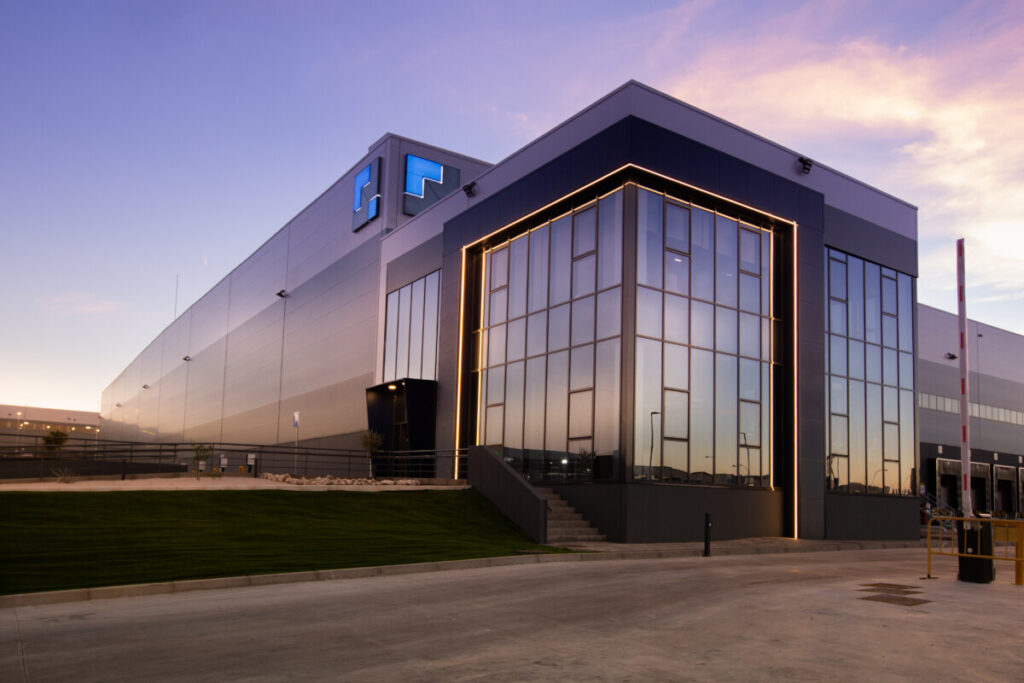
Far from being seen as peripheral locations, these areas are strengthening their position on the logistics map thanks to their ability to absorb operations and develop increasingly comprehensive hubs. It is within this context that Illescas III, Mountpark’s asset located at Plataforma Central Iberum, currently available and covering an area of 12,590 m², is situated. Its integration within one of the most established logistics hubs in central Spain allows this trend to be realised in a real-world scenario.
Logistics is no longer just about proximity
The evolution of supply chains is changing the way companies assess logistics locations. For years, the dominant criterion was proximity to the city centre. Today, however, the market is increasingly analysing the actual operational efficiency.
Furthermore, the property is situated within an area that already hosts a significant concentration of logistics and business activity. The presence of operators and companies linked to the supply chain creates an environment well-suited to accommodating new operations and supporting the growth of existing businesses.
Platforms functioning as business ecosystems
Another major transformation in the logistics property market concerns the role of logistics platforms. Today, they no longer function solely as storage or distribution spaces. They are becoming business ecosystems where operators, suppliers, industrial activity and specialised services coexist.
Plataforma Central Iberum has established itself as a leading hub for distribution and e-commerce in central Spain, bringing together companies such as Amazon, Toyota, Michelin, GXO, Airbus, Zalando and SEUR, amongst others. This concentration of activity offers clear operational advantages: more connections, greater capacity for collaboration and a logistics network equipped to handle complex operations.
In this context, Illescas III does not function as an isolated asset, but as part of a vibrant business environment, where companies can integrate into an already established ecosystem that is ready to continue growing.
An asset designed for efficient operation
The market is also raising the bar for logistics assets themselves. Operational flexibility, the capacity to handle high volumes and energy efficiency are now standard criteria in the decision-making processes of operators and investors.
Illescas III incorporates features designed to facilitate smooth and efficient operations, including 17 loading and unloading bays, a spacious manoeuvring yard and a clear height suitable for intensive operations. These features enable the facility to meet the needs of companies seeking premises ready for growth without compromising on efficiency or flexibility.
In terms of sustainability, the property holds BREEAM ‘Excellent’ certification, an A energy rating and is pre-fitted for a solar panel installation. Beyond the certifications, these features respond to a growing demand for spaces capable of reducing consumption, improving energy efficiency and aligning with companies’ ESG objectives.
Wellbeing and operations: two increasingly interconnected concepts
The logistics market is also beginning to pay greater attention to the working environment. Aspects that were barely part of the conversation a few years ago are now starting to carry weight in the decision-making processes of companies and operators.
The expansive glass façade, the flood of natural light, the wellness areas and the charging points reflect how new logistics facilities are incorporating measures designed to improve the comfort and experience of the people who work there.
This shift responds to an increasingly evident reality within the sector: attracting and retaining talent also depends on the quality of the spaces from which operations are conducted. Companies no longer analyse just the warehouse itself, but also the entire surrounding environment. Connectivity, services, business activity and growth potential are factors that now carry decisive weight in decision-making. In this regard, the third logistics ring is demonstrating precisely this ability to offer more comprehensive platforms that are equipped to meet the new demands of the market.
All signs point to this trend continuing in the coming years. Logistics growth will continue to focus on hubs capable of combining connectivity, scalability and business activity, reinforcing the role of the third logistics ring as one of the key players on Madrid’s new logistics property map.
For years, much of the logistics property development in Madrid was concentrated in the areas closest to the capital. However, growth in the sector is beginning to shift towards what the market now refers to as the ‘third logistics ring’: locations that combine connectivity, growth potential and environments equipped to meet new operational requirements.
Far from being seen as peripheral locations, these areas are strengthening their position on the logistics map thanks to their ability to absorb operations and develop increasingly comprehensive hubs. It is within this context that Illescas III, Mountpark’s asset located at Plataforma Central Iberum, currently available and covering an area of 12,590 m², is situated. Its integration within one of the most established logistics hubs in central Spain allows this trend to be realised in a real-world scenario.
Logistics is no longer just about proximity
The evolution of supply chains is changing the way companies assess logistics locations. For years, the dominant criterion was proximity to the city centre. Today, however, the market is increasingly analysing the actual operational efficiency.
Furthermore, the property is situated within an area that already hosts a significant concentration of logistics and business activity. The presence of operators and companies linked to the supply chain creates an environment well-suited to accommodating new operations and supporting the growth of existing businesses.
Platforms functioning as business ecosystems
Another major transformation in the logistics property market concerns the role of logistics platforms. Today, they no longer function solely as storage or distribution spaces. They are becoming business ecosystems where operators, suppliers, industrial activity and specialised services coexist.
Plataforma Central Iberum has established itself as a leading hub for distribution and e-commerce in central Spain, bringing together companies such as Amazon, Toyota, Michelin, GXO, Airbus, Zalando and SEUR, amongst others. This concentration of activity offers clear operational advantages: more connections, greater capacity for collaboration and a logistics network equipped to handle complex operations.
In this context, Illescas III does not function as an isolated asset, but as part of a vibrant business environment, where companies can integrate into an already established ecosystem that is ready to continue growing.
An asset designed for efficient operation
The market is also raising the bar for logistics assets themselves. Operational flexibility, the capacity to handle high volumes and energy efficiency are now standard criteria in the decision-making processes of operators and investors.
Illescas III incorporates features designed to facilitate smooth and efficient operations, including 17 loading and unloading bays, a spacious manoeuvring yard and a clear height suitable for intensive operations. These features enable the facility to meet the needs of companies seeking premises ready for growth without compromising on efficiency or flexibility.
In terms of sustainability, the property holds BREEAM ‘Excellent’ certification, an A energy rating and is pre-fitted for a solar panel installation. Beyond the certifications, these features respond to a growing demand for spaces capable of reducing consumption, improving energy efficiency and aligning with companies’ ESG objectives.
Wellbeing and operations: two increasingly interconnected concepts
The logistics market is also beginning to pay greater attention to the working environment. Aspects that were barely part of the conversation a few years ago are now starting to carry weight in the decision-making processes of companies and operators.
The expansive glass façade, the flood of natural light, the wellness areas and the charging points reflect how new logistics facilities are incorporating measures designed to improve the comfort and experience of the people who work there.
This shift responds to an increasingly evident reality within the sector: attracting and retaining talent also depends on the quality of the spaces from which operations are conducted. Companies no longer analyse just the warehouse itself, but also the entire surrounding environment. Connectivity, services, business activity and growth potential are factors that now carry decisive weight in decision-making. In this regard, the third logistics ring is demonstrating precisely this ability to offer more comprehensive platforms that are equipped to meet the new demands of the market.
All signs point to this trend continuing in the coming years. Logistics growth will continue to focus on hubs capable of combining connectivity, scalability and business activity, reinforcing the role of the third logistics ring as one of the key players on Madrid’s new logistics property map.

Leandro Greblo,
Country Officer,
Iberia
Share this article
Come and visit us at Logistic & Industrial Build Madrid
Full programme coming soon
The container celebrates its 70th anniversary as a key element of the global transport revolution
Seventy years after the voyage that sparked the modern era of containerisation, this unit of load forms the basis of intermodal transport networks and moves
The ‘cold millionaires’: the most unexpected side effect of the new weight-loss drugs
The pharmaceutical cold chain has evolved from a niche sector to become a strategic component of the industry. Major operators are investing billions in an
Logistics take-up exceeded one million square metres in Spain in the first half of 2026
This represents an 80 per cent increase on the same period last year, according to the latest analysis by Cushman & Wakefield. The Spanish logistics
Montepino’s logistics portfolio is valued at 1,557 million euros
In 2025, Montepino posted a consolidated profit of 84 million euros, with rental income of 62 million euros, up 30 per cent year-on-year. Meanwhile, the